The Problem
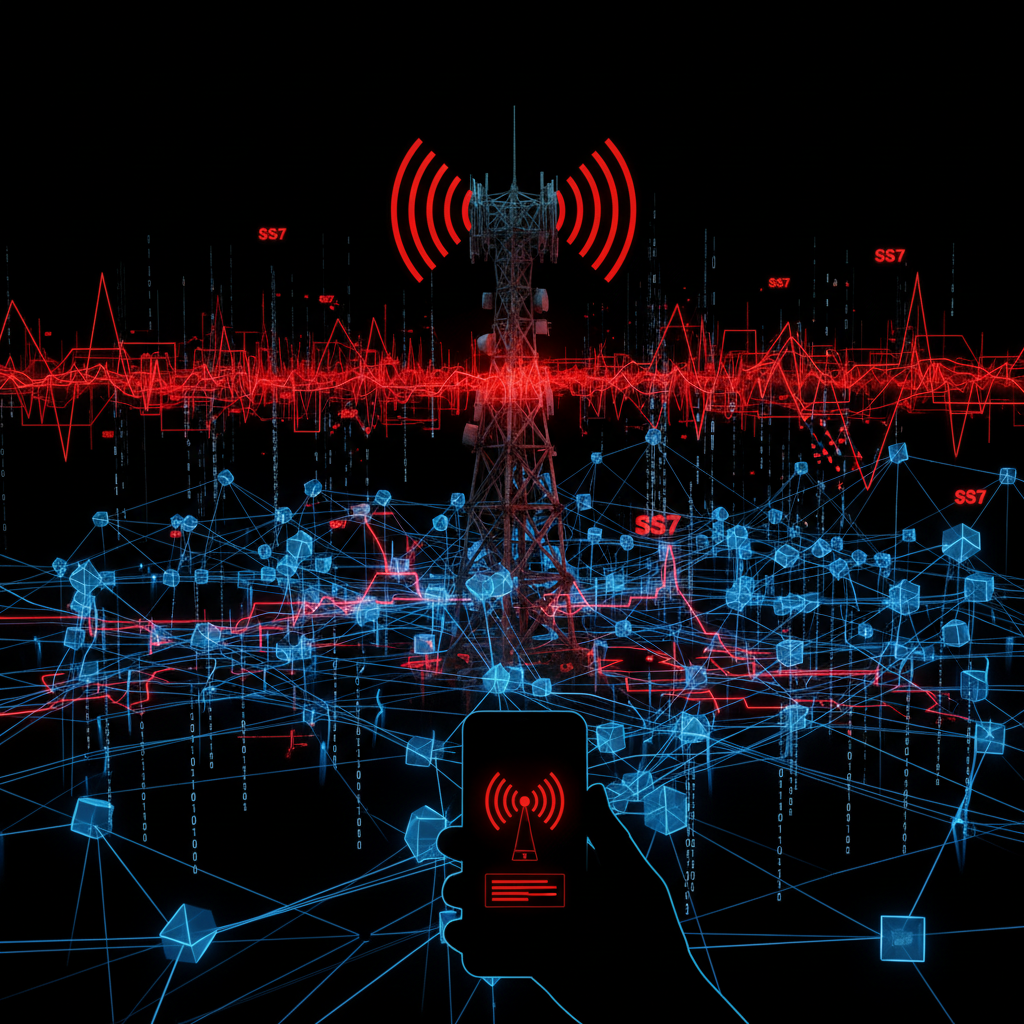
Signaling System 7 (SS7) is a suite of telephony protocols developed in 1975. It is the backbone of global telecommunications — responsible for routing calls, delivering SMS messages, enabling roaming, and coordinating handoffs between carriers worldwide. Every phone call you make, every text you send, and every time your phone connects to a tower while traveling — SS7 is involved.
The critical flaw: SS7 was designed in an era when only a handful of trusted national telecoms had access to the network. Authentication was never built in. If you have access to the SS7 network — which can be purchased through dozens of gray-market providers for under $1,000 — you can query location data, intercept SMS messages, and reroute calls for any phone number on earth, with no technical barriers.
Diameter is SS7's successor protocol, developed for 4G LTE and 5G networks. It was designed to be more secure — but it inherits many of the same architectural weaknesses, and the transition means that attackers who understand both protocols can often downgrade victims from Diameter to SS7, bypassing the newer protections entirely.
These vulnerabilities are not theoretical. They are being actively exploited — by nation-state intelligence services, private surveillance firms selling to governments, stalkerware operators, and criminal enterprises targeting high-value individuals for financial fraud and identity theft.
How SS7 and Diameter Attacks Work
SIM Swapping: Social Engineering the Carrier
SIM swapping is a separate but related attack that achieves a similar outcome — taking over your phone number — through social engineering rather than SS7 exploitation. The attacker calls your carrier's customer service line, impersonates you using personal information gathered from data breaches and social media, and convinces the agent to transfer your phone number to a SIM card the attacker controls.
Once the swap is complete, your phone loses all signal. Every call and SMS now routes to the attacker's device. They immediately use this access to trigger "forgot password" flows on your email, banking, and cryptocurrency accounts — resetting credentials via the SMS codes that are now going to them.
Who Is Actively Exploiting These Vulnerabilities
The SS7/Diameter threat landscape is not monolithic — it encompasses several distinct actor categories with different capabilities, targets, and motivations:
Protecting Against SS7 and Diameter Exploitation
The most important protective reality to understand: you cannot fix SS7 at the individual user level. These are infrastructure-level vulnerabilities that require carrier-side remediation. What you can do is eliminate the attack surface that SS7 exploitation is most commonly weaponized against — your authentication and account security posture.
What the Industry Is Doing — and What Isn't Working
The telecommunications industry has acknowledged SS7 vulnerabilities for over a decade. The GSMA (Global System for Mobile Communications Association) has published SS7 Security Recommendations and the GSMA FS.11 document outlining firewall and filtering requirements for SS7 interconnect. Progress has been slow.
The core problem is economic: SS7 roaming and interconnect generates billions in carrier revenue. Implementing strict filtering blocks not just attacks but some legitimate inter-carrier operations. Carriers have been reluctant to deploy aggressive filtering that risks disrupting revenue-generating roaming services. As a result, most SS7 firewalls are permissive by default.
5G standalone architecture (5G SA) introduces a new security framework called the Security Edge Protection Proxy (SEPP) — designed specifically to authenticate and filter inter-carrier signaling and close the class of vulnerabilities that SS7 and Diameter expose. However, 5G SA deployment is still in early stages globally, and most "5G" networks are actually 5G Non-Standalone (NSA) — still relying on 4G LTE core infrastructure and its associated Diameter vulnerabilities. Full protection will require complete migration to 5G SA architecture, which is years away for most carriers.
The realistic protective posture for individuals and organizations today is to treat the phone network as an untrusted medium for authentication and sensitive communication — regardless of what generation of network you are connected to — and to architect your security posture accordingly.